Hooked on Phonics Learning
- 4.4
- Rating
- 1.00M
- Installs
- Free
- Price
 Analysis by App-foxy
When I look at a learning app for a child, I am not only asking whether the activities are entertaining. I also want to know whether the learning path feels understandable, whether an adult can stay involved, and whether the app gives the family sensible choices around access and spending. Hooked on Phonics Learning is an education app from Hooked on Phonics that brings reading and math practice together through lessons, games, videos, and books. After using it, I see it as a structured option for families who want more direction than a random collection of children’s activities.
The app is free to install and has an Everyone content rating, which makes its intended audience clear. It has reached over one million installs and holds a 4.3 average from around 5,400 ratings, with roughly 1,700 written reviews. Those figures suggest that it has found a substantial audience, but they do not replace a parent’s own judgment. In my experience, the most important question is whether its guided style suits the child. Some children respond well to a clear sequence; others would rather explore freely or work with a teacher.
How the learning experience feels in everyday use
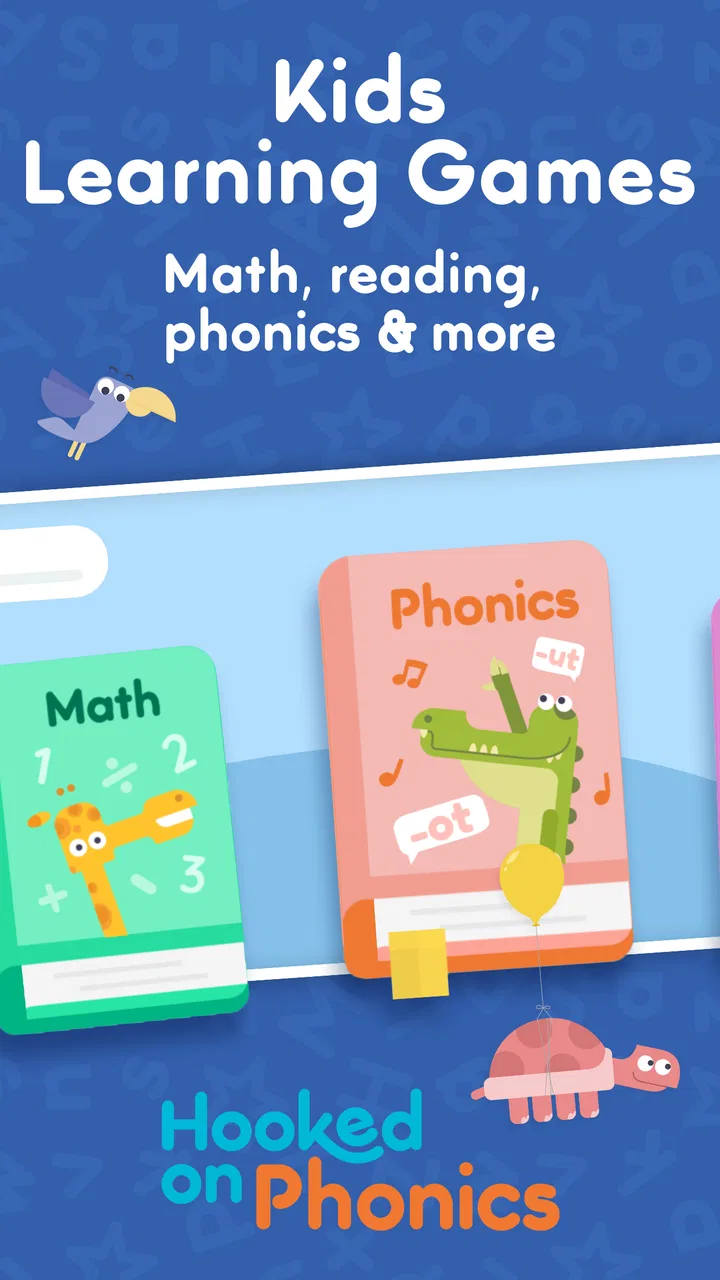
The strongest part of Hooked on Phonics Learning is its combination of formats. A child is not confined to a page of isolated questions. Reading practice can be supported by short videos, interactive games, and books, while math gives the experience a broader educational role. That variety matters during a normal week because attention changes quickly. A child who is tired of a direct exercise may still engage with a story or a game that reinforces a similar skill in a less demanding way.
You May Also Like

 Blood Strike: 2.5 Anniversary
Blood Strike’s Loadouts Turn Every Drop Into a Tactical Gamble
A close look at Blood Strike’s custom loadouts: how fast access to signature weapons reshapes its battle royale rhythm, rewards preparation, and narrows the gap between fights.

 Pandora - Music & Podcasts
Pandora’s Music Is Easy to Start, but Harder to Recover
Pandora’s strength is its low-effort path from a seed to a station. Its weak spot is how much confidence it asks you to place in connection, setup, and quiet recovery.

 8 Ball Pool
 Is Built on Rivalries, Rematches, and Routine
A close look at the rivalries, rematches, shared routines, and unanswered safety questions that turn a quick pool match into a persistent mobile community.

 Samsung Music
’s Quiet Strength Is Playing What You Already Own
Its reach comes less from spectacle than from dependable access to a personal library. That simplicity is both the app’s strongest retention engine and its ceiling.

 AccuWeather: Weather Radar
AccuWeather Review: A Quick, Clear Forecast for Everyday Decisions
For everyday plans, the best forecast is the one you can understand quickly. AccuWeather makes rain timing, radar, and local conditions easy to act on, with a few trade-offs.

 Hill Climb Racing
Why Hill Climb Racing Still Turns Crashes Into One More Run
A tiny car, a bumpy hill and one more upgrade: Hill Climb Racing keeps resurfacing because its simple chaos makes every near-miss feel personal.
More From Our News Desk



I would use it as a short, repeatable routine rather than as a long classroom replacement. For example, after school, a parent could sit with a child for a reading activity, allow a video or game to reinforce the idea, and finish with a book before moving on to dinner. The value of that routine is not simply the number of activities available. It is the ability to make practice feel like a familiar part of the day without requiring a parent to design every exercise from scratch.
The large library is useful, but it can also create a choice problem. Having more than a thousand reading and math lessons sounds generous, yet a young learner does not necessarily benefit from seeing everything at once. I recommend that an adult decide on a small target for each session, such as one reading lesson followed by one related activity. That keeps the app from becoming a browsing exercise and makes it easier to notice whether the child is actually understanding the material.
One less obvious advantage is the possibility of changing the kind of attention being used. A book asks a child to listen, look, and follow meaning. A game may ask for a quick response. A video can introduce an idea with less pressure. I would not treat these formats as interchangeable, though. If a child succeeds in a game but struggles to explain the same idea while reading a book, that is a useful signal that the activity has become entertainment rather than mastery.
Reading and math in the same place
Many children’s education apps concentrate on one school subject. Hooked on Phonics Learning is more practical for families who want reading and math practice in one place. That does not automatically make it better than a focused reading program or a dedicated math app. It does reduce the need to switch between different interfaces, accounts, and routines, which can be valuable when a parent is trying to keep learning time simple.
The trade-off is depth and focus. A child who needs intensive support with decoding may benefit more from a program built entirely around reading instruction. Likewise, a child working on a specific math topic may need a specialist tool or direct help from a teacher. I see this app as a broad home-learning companion, not as a diagnostic system or a substitute for individualized instruction.
The book element is especially important in that comparison. Some learning apps reward tapping quickly, while books slow the pace down and encourage attention to meaning. I would make the book portion the anchor of a session and use games or videos as reinforcement. This simple order helps prevent the most immediately exciting activity from taking over the entire routine.
Where parents still need to guide the experience
The app can provide structure, but it cannot decide what a particular child needs on a difficult day. A parent still has to notice frustration, boredom, guessing, or repeated mistakes. I would keep a small note outside the app after each session: what felt easy, what caused hesitation, and whether the child could use the skill without the game’s prompts. That habit turns the app into an observation tool rather than a digital babysitter.
A useful workflow is to separate practice from checking. During the activity, let the child attempt an answer without immediately correcting every mistake. Afterward, ask the child to show the idea in a book, aloud, or with a simple example on paper. This is a more reliable way to judge progress than relying only on a successful screen interaction. It also helps a parent decide when to repeat a lesson and when to move forward.
I would also avoid using the app as a reward for every unrelated behavior. If screen time is always framed as a prize, the learning content can start to feel like an obstacle before the fun begins. A predictable schedule works better: a short activity at a regular time, with the adult choosing when to stop. That approach is particularly helpful for younger children who may continue tapping long after their concentration has faded.
Trust, spending, and the choices families should review
Trust is not only about whether the lessons look appropriate. It also includes what happens when an account is created, how purchases are presented, and whether an adult can remain in control of the child’s use. The app is free to download, but it includes in-app purchases ranging from $0.99 to $79.99 per item. That is the point where I would slow down and review every purchase screen carefully instead of assuming that free installation means the complete experience costs nothing.
For a family device, I would use the operating system’s purchase controls and require adult approval before any transaction. I would also avoid handing the device to a child while an account or payment screen is already open. These are simple precautions, but they matter more in a children’s app because a child may understand a bright button as part of the lesson without understanding its financial effect.
I would pay attention to the difference between a child’s learning profile and an adult’s account responsibilities. If the app asks for account details, the adult should enter them, read the available choices, and decide whether the arrangement fits the household. The child should be able to focus on the lesson without being responsible for subscriptions, purchases, or account decisions. Keeping those roles separate is one of the clearest ways to preserve user agency.
Data-sensitive moments deserve the same careful approach. Any time an app requests information, presents an account option, or moves from learning content toward payment, I would pause and read the visible explanation rather than tapping through automatically. I would also check the device’s current permission settings and review them periodically. I do not treat a familiar children’s brand as a reason to skip those checks; trust should come from clear choices and active oversight.
The app’s developer is Hooked on Phonics, and its long availability is reflected by a release date of May 8, 2014. The current version is 7.3.03, with a minimum operating-system requirement of 11. Before installing it on an older device, I would check that the system meets that requirement and that the device has enough room for the app and its learning content. A failed installation or an outdated device can turn a promising routine into unnecessary frustration.
What the free starting point does and does not mean
Calling an app free is useful, but it does not answer the more practical question: can a family use it meaningfully without paying? I would install it, inspect the opening experience, and identify which lessons and materials are available before making any decision. If the child enjoys the approach, the adult can then decide whether an in-app purchase is justified. That is better than buying first and discovering later that the teaching style is not a match.
The upper end of the purchase range is significant enough that I would treat any larger purchase as a deliberate household decision, not an impulse choice made during a child’s session. Consider how often the app will realistically be used, whether the child already has instruction elsewhere, and whether the available content fills a real gap. A broad library is only good value if it becomes part of a routine.
I would also be cautious about judging the app by the number of lessons alone. Quantity can be helpful for repeated practice, but it can also make it harder to tell whether the child is progressing. Before spending, I would test whether the child can return to a skill after a break, read or solve something without the app’s immediate prompts, and explain what was learned. Those checks reveal more than a large content count.
Who will benefit most, and who may want another option
I think the best fit is a family looking for guided practice across early reading and math, especially when an adult can participate regularly. It is also a sensible choice for children who enjoy switching between stories, videos, and interactive tasks. The mixed format can make repetition less dull, and the broad subject coverage can simplify a home routine.
I would be less enthusiastic for a child who needs a highly specific intervention, advanced schoolwork, or a completely open-ended creative environment. A child who becomes anxious when an app marks an answer wrong may need a gentler approach with more direct adult support. Families that want a fully offline, one-time-purchase experience should also examine the purchase flow and available access carefully before committing.
Compared with printed workbooks, the app offers more variety and immediate interaction, but a workbook is easier to supervise without a screen and can be used anywhere. Compared with educational videos, it should offer more active participation because the child is expected to respond rather than only watch. Compared with a live tutor, it is more convenient and repeatable but cannot notice subtle misunderstandings, change explanations in real time, or provide human encouragement in the same way.
That comparison leads to a practical recommendation: use Hooked on Phonics Learning as one part of a learning plan. Pair a digital lesson with conversation, paper, physical objects, and shared reading. If the app introduces a math idea, ask the child to demonstrate it with household items. If it presents reading practice, ask the child to find the same sound or word in a printed book. These small extensions make the screen activity more transferable.
My cautious verdict
After weighing the structure, variety, and account considerations, I see Hooked on Phonics Learning as a useful free starting point for families who want reading and math practice in one education app. Its strongest quality is not simply that it contains many lessons. It is the way videos, games, and books can be arranged into a short routine that feels more varied than a workbook while remaining more purposeful than unrestricted screen play.
My recommendation comes with boundaries. I would supervise the first sessions, keep purchases under adult control, review visible account and permission choices, and use a book or offline activity to check whether learning carries beyond the app. I would also stop or switch approaches if the child is guessing, becoming upset, or treating every activity as a race. No content library can compensate for a poor fit.
For a parent who wants a guided supplement and is comfortable making the final decisions about access and spending, this app is worth trying. For a child who needs specialized teaching or for a household seeking a completely screen-free solution, a teacher, workbook, library book, or focused alternative may be better. My final view is positive but measured: the app works best when it supports an adult-led routine rather than replacing one.
FAQs for Hooked on Phonics Learning
01What age group is Hooked on Phonics Learning suitable for?
Hooked on Phonics Learning is designed for children aged 3 to 8 years old. It focuses on early literacy skills, making it ideal for preschoolers, kindergarteners, and early elementary students. The app uses interactive and engaging methods to help children develop reading skills at their own pace.
02Is an internet connection required to use the app?
Hooked on Phonics Learning does not require a constant internet connection to function. Once the lessons are downloaded, children can access them offline. However, an internet connection is necessary for initial downloads and updates, ensuring the app stays current with new content and features.
03Are there any in-app purchases or subscriptions?
The app offers a subscription model, which grants access to all available content. While there may be some free content to explore initially, unlocking the full range of lessons and features requires a subscription. This model allows for continuous updates and new materials to enhance the learning experience.
04How does Hooked on Phonics Learning track progress?
Hooked on Phonics Learning includes a progress tracking feature that allows parents and educators to monitor a child's reading development. This feature provides insights into completed lessons, words learned, and areas that may need more focus, ensuring personalized learning paths for each child.
05What teaching methods does the app use?
The app employs a phonics-based approach, integrating visual, auditory, and kinesthetic learning styles. It uses songs, stories, and interactive games to reinforce phonetic concepts. This multi-sensory method helps children understand the relationship between letters and sounds, promoting effective reading skills.
Pros
- Engaging interactive lessons.
- Supports multiple learning styles.
- Includes progress tracking tools.
- Offline access available.
- Kid-friendly interface.
Cons
- Limited free content.
- Requires subscription for full access.
- No multi-language support.
- App size is large.
- Occasional loading delays.

Hooked on Phonics Learning
Gallery